
Gladstone City Directory Shelf
Gladstone has no confirmed standalone annual run online. That is not a dead end. The strongest holdings are regional publications. These fold Gladstone and Clay County residents into larger works. The Midwest Genealogy Center, known as MGC, keeps city directories, telephone books, yearbooks, maps, microforms, and local histories under one roof. A FamilySearch catalog title also lists Kansas City directories. These include Gladstone and North Kansas City for selected years. Record the publication title and year with every hit. Note whether the entry came from an alphabetical section or an address section.
| Collection | Years | Where Held | Access |
|---|---|---|---|
| Kansas City directories, including Gladstone examples | 1965, 1973, 1982 | MGC and FamilySearch catalog leads | Catalog lead; page access may need a visit or account |
| Kansas City city-directory runs | 1859-60; later runs through the twentieth century, with gaps | MGC microfilm/microfiche and Kansas City Public Library Missouri Valley | On-site reader; check the guide for the exact reel or fiche |
| Liberty directory with Clay County rural residents | 1986 | MGC and FamilySearch catalog lead | Confirm local catalog and scan or film availability |
| Missouri Digital Heritage city directories | Hannibal 1859-1925 and St. Louis collections | Missouri Digital Heritage | Online full-text search; no Gladstone run located |
Coverage jumps around. The guide itself warns that older volumes can be incomplete and formats vary widely. A year may be missing from the shelf. A name search may come back blank. A title may read Kansas City instead. None of that means a Gladstone household was absent. The useful volume may simply be a phone book. It could be a reverse directory. Or it may be a regional title sitting on a different reel.
Note: Preserve the printed title and year, because those details explain why Gladstone appears under a regional heading rather than a municipal one.
Gladstone Directory Years Are Regional
Regional naming is the central fact here. Kansas City volumes described a market, not a city-limit test. Someone listed in a volume covering Gladstone may still carry a Kansas City postal label, and a local street may sit under a different community heading. So cast a wide net. Search Gladstone, Kansas City, Clay County, Liberty, a subdivision name, and the street spelling printed at the time. The 1986 Liberty directory rewards this approach. It includes Clay County rural residents even though its title never says Gladstone. A flexible search strategy recovers households that a narrow one misses.
Check an older map or plat before concluding that two differently written addresses are unrelated. The city's street grid, legal descriptions, and neighborhood names all hold clues. They can bridge a printed label to a later address. Gladstone publishes no year-by-year readdressing schedule. Never assign a new number to an old entry on your own. Support it with a map, plat, or record.
Gladstone City Directory Research at MGC
MGC in Independence is the main hands-on shelf for this work. It reports more than 250,000 books and tens of thousands of microforms. The collection includes directories, phone books, maps, and county records. Hours run Monday through Saturday, 10 a.m. to 8 p.m. Sunday hours are 1 p.m. to 8 p.m. Search the catalog before traveling. Then ask staff for Kansas City and Gladstone directory holdings, Clay County rural-resident titles, address or reverse sections, and Phonefiche. Some licensed genealogy resources, including Ancestry Library Edition, work only inside the library.
The MGC Genealogy Gallery is a strong online starting point. It offers a digitized local-history and archive search interface.
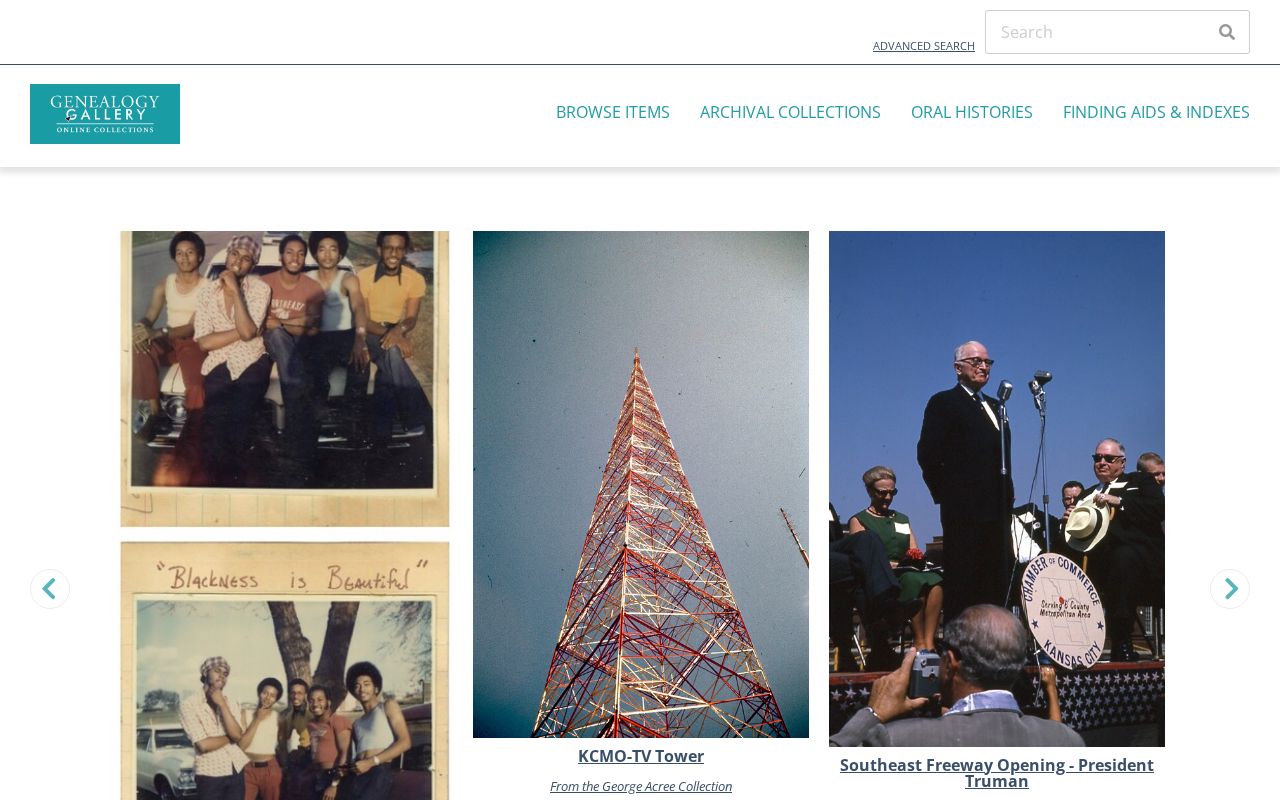
Use the Gallery to spot a collection or search term first. Then confirm whether a readable directory page sits online or needs a staff-assisted microform search. Remote results are only part of the route. MGC's guide notes cataloged call numbers and differing formats. So a searcher who needs an address section may still require the physical volume even when an alphabetical name lead appears online.
Gladstone Archives Beyond City Directories
When a directory title or year is missing, broaden the repository instead of quitting. Clay County Archives offers on-site and correspondence research in original county records. The Clay County Historical Society & Museum in Liberty makes another county-level stop. The State Historical Society of Missouri, or SHSMO, holds Clay County manuscript finding aids, including the 1825-1920 Vera Haworth Eldridge material and Clay County History Papers from 1850-1956. Clippings, photographs, family material, or genealogy context from these sources can help test a directory entry against independent evidence.
The SHSMO Clay County collections page points researchers toward county manuscript holdings and finding aids.
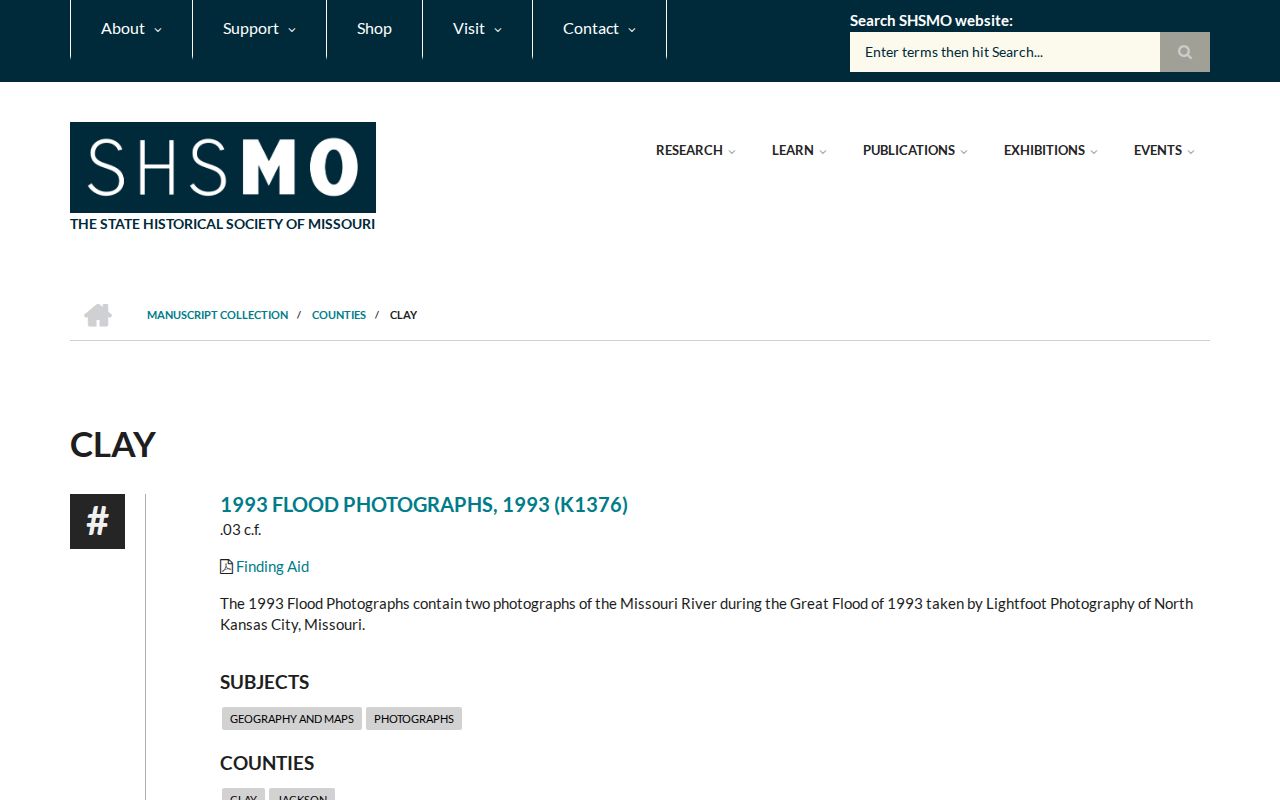
A manuscript finding aid is a lead, not proof that every name is indexed. Ask the repository whether a box, clipping file, or surname index can be searched. The Clay County Archives research-services page describes the on-site and correspondence route for original county material.
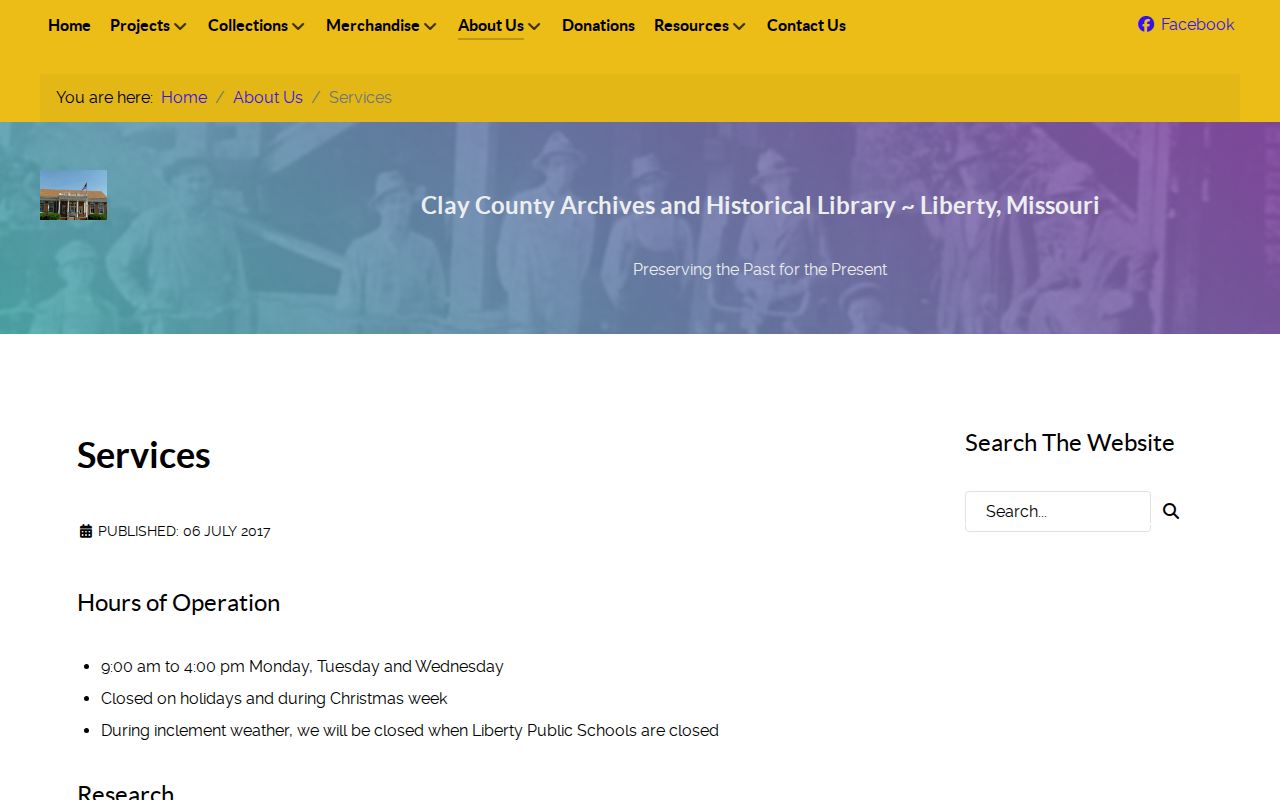
Archive staff can quote research or copy costs for a bounded question. Give a name, a date range, and a record type. Skip requests for every record tied to a person.
Reading a Gladstone City Directory
A historical city directory packs a lot into a small page. No Gladstone volume prints every field. Treat any inventory as a transcription guide rather than a guarantee. Copy the wording exactly. Photograph or transcribe the abbreviation key too. Note whether each result came from the alphabetical list or the address section. That discipline pays off later, when initials, street forms, or household labels shift between years.
| Name | Record the spelling, initials, suffix, and any surname variant exactly as printed. |
|---|---|
| Address | Copy the house number and street form, then identify whether it is an alphabetical or address-section entry. |
| Work or business line | Transcribe any occupation, employer, or business wording only when the volume actually prints it. |
| Household notation | Record spouse, widow, telephone, owner, renter, or other household marks only if visible. |
| Publication context | Keep the publisher, year, page, and abbreviation key with the entry. |
- Criss-cross directory
- An address-ordered section that can place listed names along a street when that volume includes one.
- Householder index
- An index organized around a household or address, rather than simply one alphabetical person listing.
- Abbreviation key
- The publisher’s explanation of shortened labels and marks, usually near the front of the volume; copy it before interpreting an entry.
Never expand an abbreviation from memory. Different publishers, and different years from the same publisher, can use different keys, so a mark that reads like an ownership notation in one book may mean something else in another.
Tracing Gladstone City Directories
Directory years work best as a sequence. Start with the earliest confirmed appearance. Then move forward and backward through the available regional titles. A disappearance can mean a move, a death, a survey gap, a changed spelling, or a household that simply went unlisted. Treat the federal census as a date-specific check. A directory is never a complete count. The 1950 census is the latest federal decennial schedule released, and the next release will not replace a missing directory year.
- Find the surname in a cataloged Kansas City, Gladstone-including, Liberty, or Clay County volume and copy the full citation.
- Check the same year’s address or criss-cross section when the volume offers one, recording every printed household detail.
- Search the surname forward and back through available years, including spelling variants and the regional postal label.
- Pair the closest directory years with the 1950 or earlier federal census, newspaper notices, and maps to test the chronology.
- Use an obituary, archive inquiry, or eligible vital or probate record only as a separate confirmation of the historical trail.
Modern address questions need different evidence. When a historical find calls for present-day corroboration, use the separate Gladstone resident lookup route instead of treating an old directory entry as current proof.
Gladstone Directory History Timeline
The directory shelf sits inside a longer history. Clay County records stretch across paper books, microform, courthouse files, municipal records, and web catalogs, and that span explains why a researcher moves between formats. These milestones mark the record systems. They do not fix a first or last Gladstone-only directory year.
| 1822 | Clay County was organized, and Recorder real-estate books begin in that year. |
|---|---|
| 1952 | Gladstone incorporated, adding municipal records to the older county record landscape. |
| 1965, 1973, 1982 | FamilySearch catalog examples identify Kansas City directories including Gladstone and North Kansas City. |
| 1986 | A Liberty directory includes Clay County rural residents, a useful regional bridge. |
| 1999 | Clay County began daily digital imaging for Recorder material, while many directory searches still depend on older formats. |
The split between directory surveys and record systems matters. County books may preserve a legal chain. City records may show civic activity, while a directory offers an everyday historical address, and each answers a different date-bound question.
Gladstone Directory Companion Sources
Directories gain meaning when paired with the right companion record. MGC and the Kansas City Public Library’s Missouri Valley collections hold city directories and maps. They also hold photographs, newspapers, and local-history material. The Clay County Genealogical Society shows the method at work. It connected a 1904 directory, a 1903 plat book, an 1890 plat, and the 1910 census. Apply the same sequence to Gladstone. A name in one historical source is never proof of a current resident.
A street that seems to vanish calls for maps. Compare the entry with the official Gladstone street and subdivision maps. Then identify the legal description or plat when the question concerns a place. For family questions, look to yearbooks. Newspaper notices, obituaries, and archive clippings help too. Repository staff can tell you whether a local file is digitized or remains on paper.
Note: A newspaper notice or obituary can supply dates and relatives. It is not current address evidence.
Gladstone City Directory Gaps
Missouri Digital Heritage hosts no Gladstone digital run. Its digitized collections search name, address, and occupation at once. The directory holdings center on Hannibal and St. Louis. An empty Gladstone search there marks a collection boundary, not proof that a household left no historical record. Fall back on the MGC catalog and microform shelf. From there, try Kansas City Public Library, Clay County Archives, the Historical Society, and SHSMO.
Use online catalogs and finding aids first. Then visit, phone, or send a focused inquiry to the repository holding the likely format. MGC, the Archives, the Historical Society, and SHSMO each open a different path to older material. Fees, appointments, and copy limits differ. Confirm the details before ordering a search.